Better activity and training reporting for Office of Head Start
How might we ease the burden of reporting on training and technical assistance, so that grantees can receiving federal funding in the future?
Organization: Administration for Children and Families, Office of Head Start
My role: Senior UX Designer
Collaborators: Senior researcher, Senior product manager, National director, Head Start
Timeline: 8 months
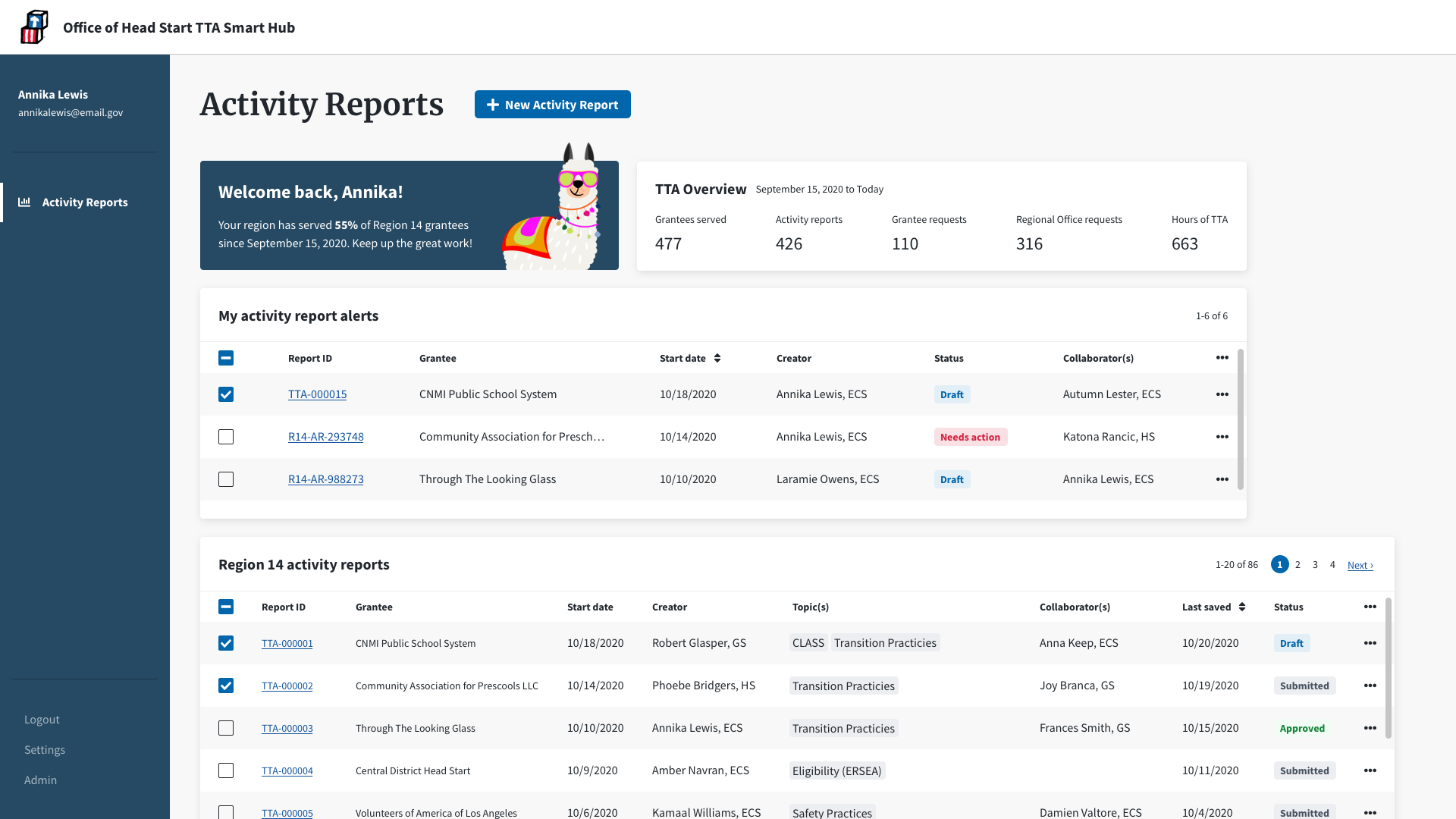
There are several layers of messy human and technological systems between the Head Start central office, the 12 regions, grantees, and the millions of kids they serve.
Reporting on the training and technical assistance provided to grantees suffers from a combination of disconnected systems, reliance on narrative and anecdotal information, and inconsistent terminology.
The problem
Each year Head Start provides services to more than one million kids.
Head Start helps these children and their families by offering educational, nutritional, health, social, and other training or technical assistance (TTA) to grantees in 12 different regions. Federal funding supports 1,600 grantees who are responsible for the quality of the program and health and safety of enrolled children.
About Head Start
Discovery
We began by understanding what research had already been done on this problem, identifying opportunities for improvement, and prioritizing what to include in our MVP.
Through a series of user interviews and observability studies with all 12 regions, I was able to create a map of the entire TTA process and the reporting information that was consistent among them all. This served as the catalyst for our MVP.
Ultimately, we landed on the importance of getting “good” and consistent data into the tool for our MVP. Part of that work was collaborating with our SMEs to standardize language and process across the nation.
“We have a lot of trouble with measuring progress and rely heavily on anecdotes. But long narrative is hard to analyze.”
What’s in a form?
Our focus was to create a data platform that allows TTA providers to report on their activities in a way that encourages clean information entry to help the Head Start central office analyze and measure the success of grantees.
This lead to the creation of an Activity Report form that helps better contextualize why and how TTA funding was used.
Sketchy iteration + USWDS
I’ll always be a fan of analog exploration. Starting out ideation with pen and paper removed all focus away from color and type. This whole MVP is focused around a robust form, so it was important to focus on layout, and for me the best way to do that is by hand.
Once the idea was there, I moved to wireframing using the U.S. Web Design System (USWDS). The USWDS made it easy iterate while keeping accessibility a top priority.
Based on problems identified in discovery, my ideation focused on:
Chaptered/chunked navigation of the form
Minimum narrative or long text based inputs
Standardizing language and language consistency
Ability to create drafts
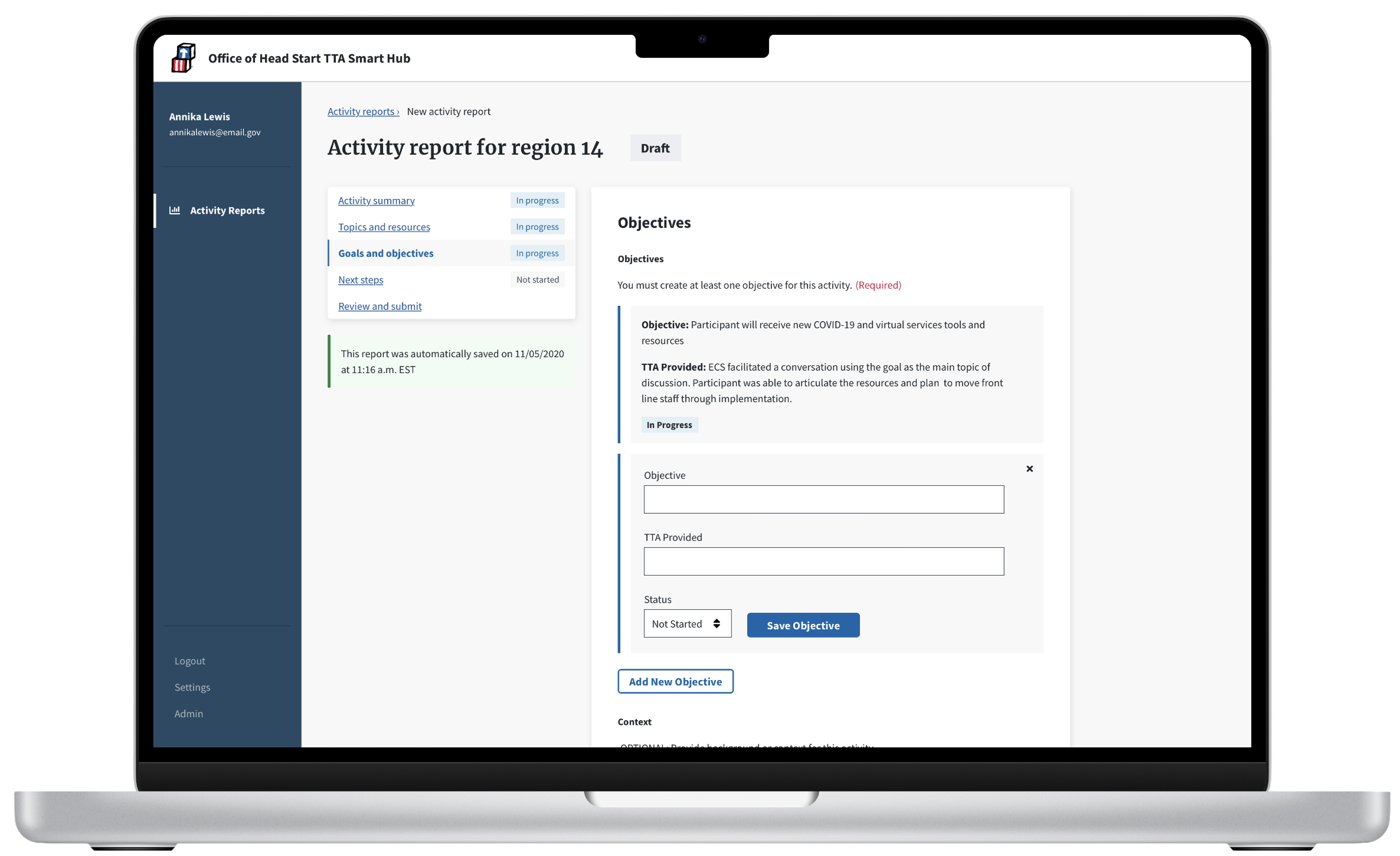
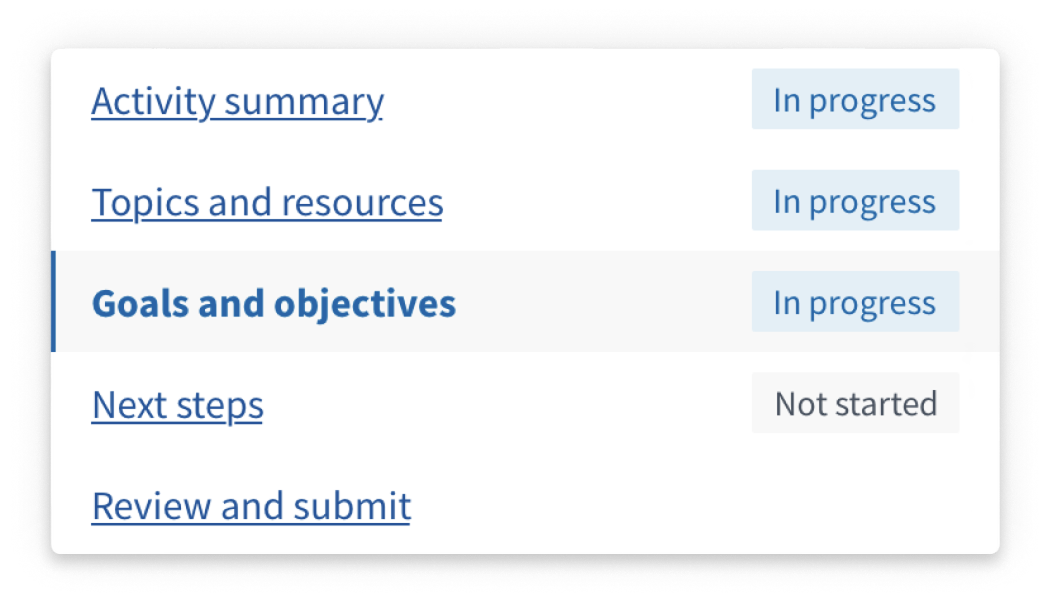
Through various rounds of testing and focus groups, we learned that specialists need a flexible form that allows them to input information on any page at any time. They also needed the ability to create draft reports to reduce the usage of other tools (i.e. creating a Word document and pasting the information here).
Using the U.S. Web Design System as a guide, I created design library of accessible components. The first component in that library was a sticky, non-linear side navigation that
Flexibility is a must.
The Solution
The TTA Smart Hub MVP allows Head Start TTA providers to easily create and manage their activity reports. Instead of relying on multiple different systems to complete reports and decoding varying taxonomy by region, users can now speak the same language in the same system.